North Coast
GIOVINAZZO
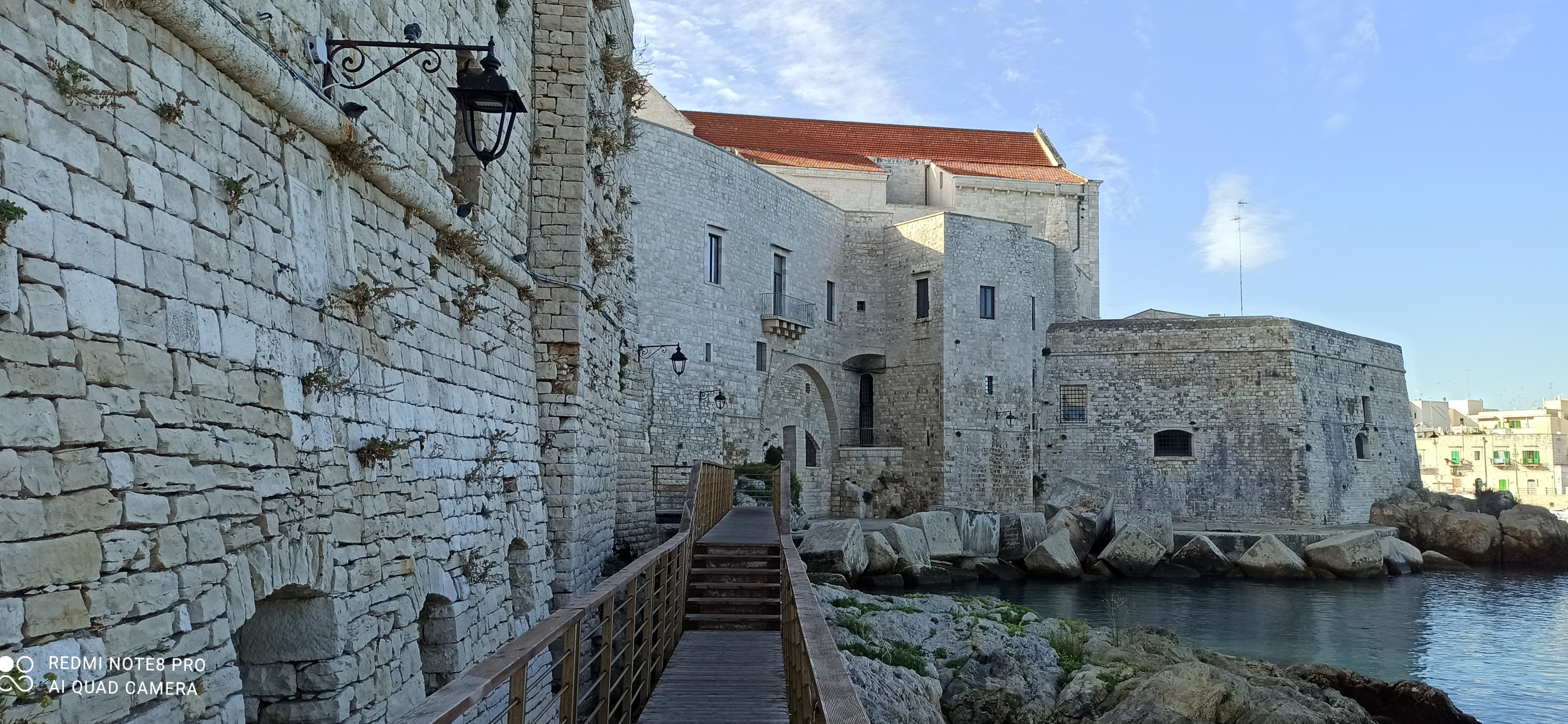
An enchanting seaside village with an ancient heart, with the dolmen of San Silvestro, the Cathedral of Santa Maria Assunta and the Arch of Trajan. Giovinazzo is a delightful medieval village on the Adriatic, with a characteristic small port and splendid fortified seafront, between Molfetta and Bari, which is less than 20 km away. This city has all it takes to be a real revelation. Clear sea and beautiful beaches, but also a lot of history and traces of a past that is never too distant to be discovered and appreciated.
We have, for example, traces of the Roman era which make Giovinazzo even richer in meaning. We are talking about the Arch of Trajan which must be crossed to enter the ancient village. From here then the advice is to let yourself be inspired and to walk with your nose up to discover all the beauties of the city.
Not only memories of the Roman era, but also many squares and small squares, glimpses overlooking the sea and medieval churches: there is so much to discover here.
Among the many beauties to visit we point out the Cathedral of Santa Maria Assunta which is the symbolic building of the city. Built in a typical Gothic-Romanesque style, the church has a rich and complex architecture that leaves anyone who visits it speechless. The Church of San Domenico and the Church of Santa Maria di Costantinopoli are also very characteristic, as well as the Convent of the Dominican Fathers.
Arriving in Piazza Vittorio Emanuele II, the main one in the town, you can admire another important part of Giovinazzo's artistic and cultural heritage. Among what to see in Giovinazzo should also be mentioned the Palazzo Ducale and the Palazzo Severo Vergine which are undoubtedly the most important and historic in the city.
Then walking along the Levante seafront will allow all tourists to have a wonderful experience because from here you can enjoy a spectacular view.
But Giovinazzo also has beautiful beaches, whoever arrives in the area can't wait to dive into the crystal clear waters that lap this pearl of the Adriatic. Here there are pebble beaches and coves with coves and rocks. Moving from the inhabited center and continuing north, a short distance from the port, you come across the Lido Azzurro area, a beach of pebbles and rocks. Going even further north, however, you arrive in the Cala Arena area. There is also some sand here and this is why it is the most popular stretch of coast for families. In this area there are both bathing establishments and a free beach. A real spectacle for those seeking relaxation, perhaps in the shade of the lush palm trees.
Moving south, however, you come across a beautiful rocky inlet of Cala San Spiriticchio. The Levante seafront, on the other hand, is dotted with lidos and beaches to be discovered and for every taste and need. Here the sea is clear and clean, as in all of Puglia. Finding out what to see in Giovinazzo starting from the beaches allows you to have a wonderful experience which is exactly what you are looking for during a summer holiday.
Even today Giovinazzo is little known compared to more sought-after destinations such as, for example, Polignano a Mare, Trani or Monopoli. Yet this city has so much to tell and to give to those who choose to visit it for a weekend, an afternoon or a longer holiday.
How to get there:
By car: 25 km da Bari
By train: 20’ (Ferrovie dello Stato)
MOLFETTA
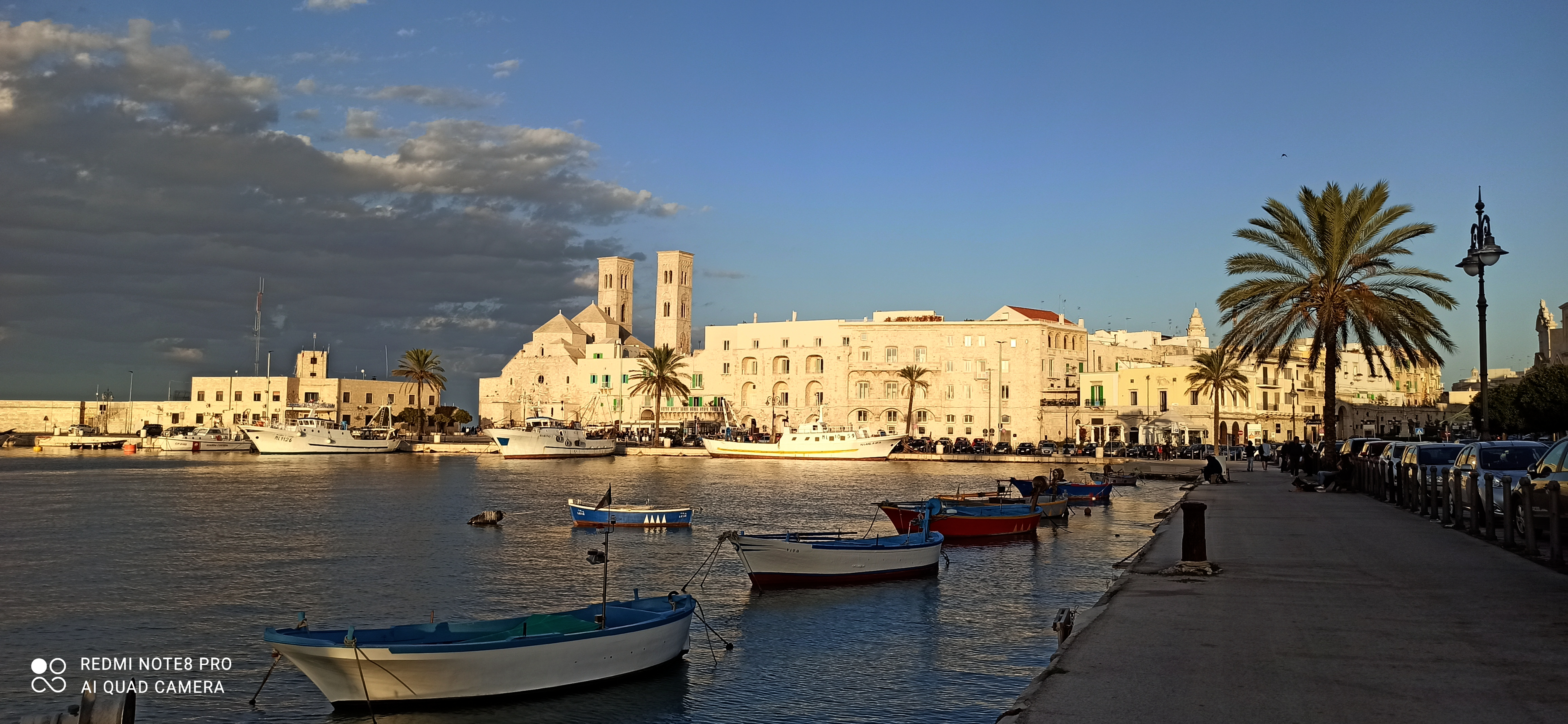
Molfetta is easily accessible, thanks to its geographical position, crossed by the main motorway and railway arteries and in connection with the nearest airports of Bari and Brindisi. The origins of Molfetta are very ancient, in fact archaeological finds from the Roman era dating back to the 4th century BC have been found, and there are still living testimonies of this period. More recent evidence of the current name of the city dates back to 925 AD, a time in which the name Molfetta appears for the first time in an official document. In fact, there are many historical events attributable to the city of Molfetta, starting from the era of Byzantine domination, passing through Frederick II of Swabia who understood the strategic importance of this nerve center overlooking the sea, due to the maritime and commercial exchanges they could do with other cities.
In Molfetta it is possible to admire buildings of rare architectural beauty, such as the Cathedral of San Corrado, a unique example of neo-Romanesque architecture, dating back to the 11th century, of imposing dimensions, equipped with two bell towers that dominate the entire city.
Of great interest is also the Cathedral of the Santissima Assunta, located just outside the city walls and which houses a canvas of impressive dimensions, depicting the Assumption of the Madonna into heaven, and attributed to the painter Giaquinto.
The same church, which became the city's cathedral in the 18th century and was built at the behest of the Jesuit fathers in the 18th century, is recognizable by the statue of St. Ignatius of Loyola placed on its top. Other religious buildings endowed with particular charm are the Basilica of the Madonna dei Martiri and the church of Purgatorio and that of San Pietro. The first is striking not only for its imposing structure, but also because several paintings are kept inside, including one, very dear to local sailors, that of the Madonna dei Martiri, patroness of fishermen and sailors. Also much loved by the people of Molfetta is the church of Purgatorio, from where the spectacular procession of Holy Week starts. Excellent testimony of the Baroque style, very present in Molfetta, is the church of San Pietro; located in an alley in the center, it catches visitors unprepared and amazed by the beauty of its facade adorned with precious white marble.
Then there are the historic buildings, such as the Palazzo Comunale, Palazzo Giovene, the beautiful Palazzo Cavalletti, located in the historic centre; while on the outskirts of the city you can visit the watchtowers of Molfetta.
The characteristic little restaurants along the coast or even the farmhouses that offer the possibility of accessing dedicated itineraries and tastings of local products, allow the visitor to let himself be conquered by local flavours; raw seafood is one of the dishes that best express the essence of the local cuisine, but also the incomparable orecchiette, cooked with many different recipes, are those indispensable dishes in the Bari area.
In Molfetta you can grasp the truest and most lively characteristics of northern Puglia, the one that manages to perfectly combine sea and land, in a perfect combination of history, traditions, flavors and relaxation.
How to get there:
By car: 35 km from Bari
By train: 25’ (Ferrovie dello Stato)
TRANI
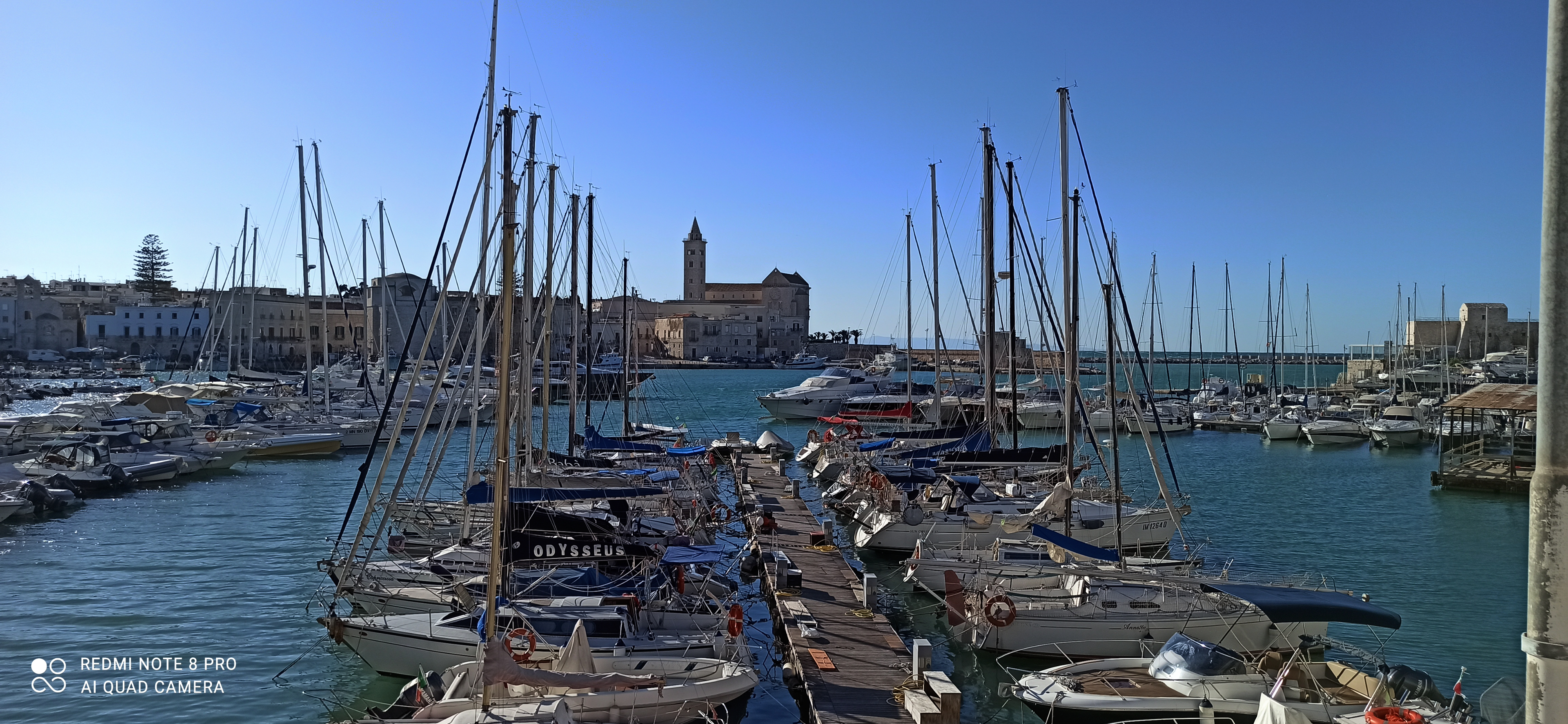
Trani, the "Pearl of the Adriatic" is an important international tourist destination in Puglia. Overlooking the suggestive port, symbol of the city, it can be described as an embroidery of white stone and a fascinating interweaving of paved alleys that run through a historic center overlooking the sea, rich in history and artistic treasures.
The Cathedral of Trani, monument messenger of a Unesco culture of peace, is a splendid example of Apulian Romanesque and rises close to the sea, so much so that it seems suspended over the water. The facade of one of the most important buildings in the city recalls the Pisan types and encloses a rose window decorated with zoomorphic figures. A double flight of stairs leads to the bronze portal of 1180, created by the sculptor Barisano da Trani, while the bell tower dominates the building. The interior is divided into three naves by coupled columns. The sober character of the decorations gives a great spirituality to the upper church, which leads to the first crypt, the Church of Santa Maria, which preserves sections of the ancient mosaic flooring. A staircase leads to the second crypt, dedicated to San Nicola Pellegrino, where the remains of the saint are kept. At the lower level there is also the hypogeum of San Leucio, excavated below sea level.
But the beating heart of the Pearl of the Adriatic is the port, the most characteristic place and which, due to its position, makes the city unique. The fishermen's boats recall its seafaring vocation and it is here that, while walking, it is possible to buy freshly caught fish and peek into one of the many bars that line the pier.
An itinerary of the city cannot fail to include a stop at the Swabian Castle of Trani, built in 1233 by Federico II, where Manfredi (son of Federico) often stayed, who also celebrated his wedding here with Elena Ducas. Built on the Sant'Antonio pier; a fort from the top of which it is possible to admire the whole inlet on which the ancient village was born and to look at the most beautiful local buildings together. Another Romanesque building, which preserves priceless works of art and which hosts various important cultural initiatives.
Speaking instead of civil architecture, we note at least the Clock Tower, the tallest building in the entire historic centre, Palazzo Cecchetto, one of the most interesting expressions of the local Renaissance, and Palazzo Antonacci Telesio, built instead in the early 1800s and then enlarged in 1845. A structure made unique by the Carriage Museum that it houses inside: it is a collection of 33 nineteenth-century carriages, mostly belonging to the Telesio family, which shows the craftsmanship of the time and allows us to relive the history of an entire social class in an unprecedented way.
Impossible not to mention the marina of Trani, characterized by fine white sand, perfect for walks and summer sports thanks to its very long coastline. The local coast is particularly appreciated both for its natural characteristics and because it is able to satisfy the most diverse needs: in fact, they range from the best equipped establishments to large stretches of free beach, where you can enjoy a decidedly wilder sea.
Trani's proposal also touches on splendid green areas. The most important is undoubtedly the Villa Comunale, the largest public garden in the city, which extends over a terrace overlooking the sea, surrounded by the ramparts of the ancient city fortification. A truly unique place, which offers a spectacular view and is home to a particularly varied fauna and flora: ranging from palm trees to holm oaks, oaks to pines, passing through 18 tanks embellished by the already mentioned Trani stone, which house around 500 fish from the more disparate species (coming from almost all the lakes and rivers of the world).
Trani is chosen every summer by thousands of tourists because it offers so much from a cultural point of view but also from that of seaside tourism: the beaches of Trani offer the possibility of spending a holiday with the whole family in the name of relaxation and fun.
How to get there:
By car: 50 km from Bari
By train: 45’ (Ferrovie dello Stato)