South Coast
POLIGNANO A MARE
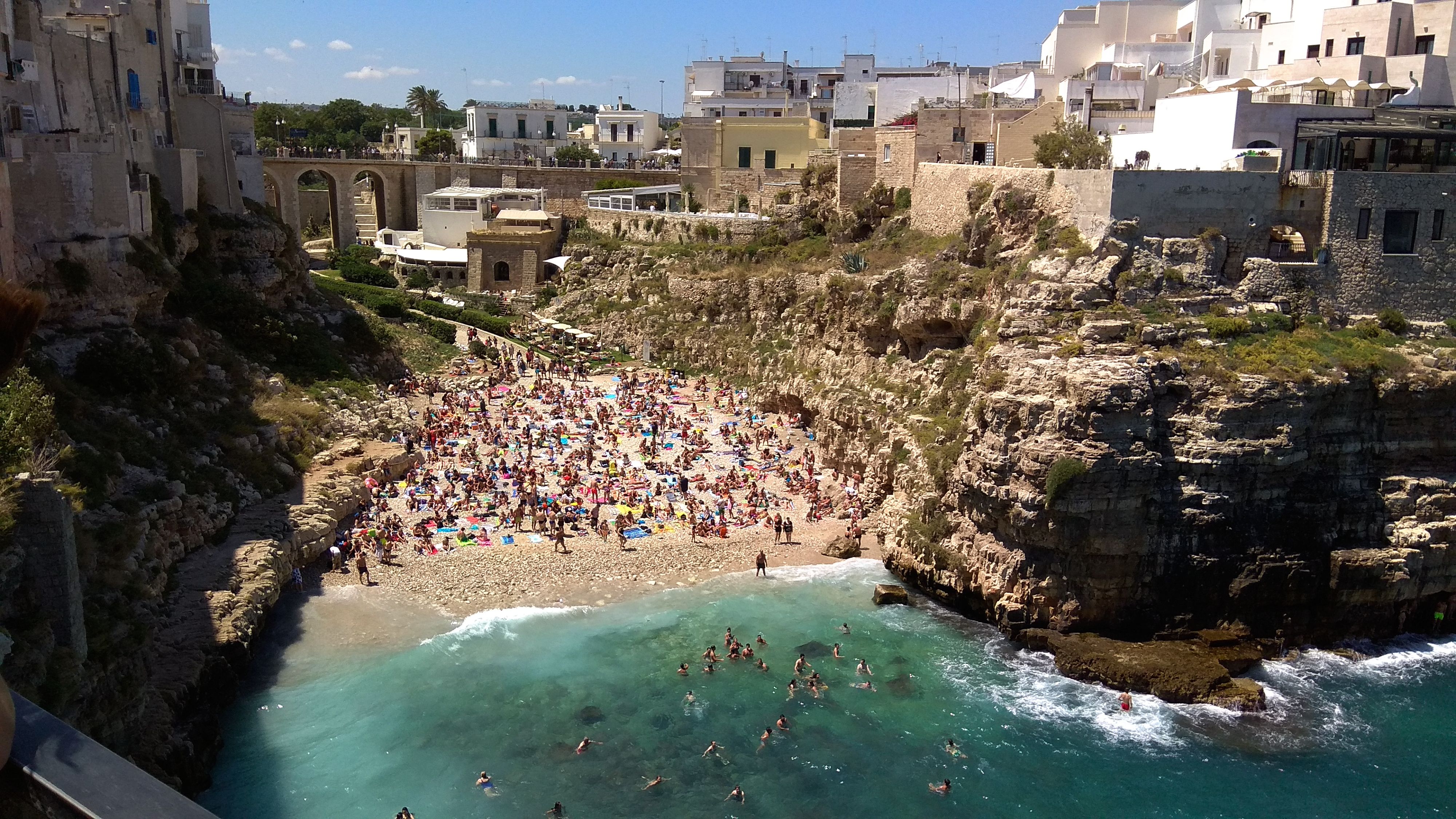
Considered one of the most beautiful villages not only in Puglia but in our whole peninsula, Polignano a Mare is a truly suggestive town that attracts many visitors every summer for its splendid beaches. Its landscape made of stone houses overlooking the turquoise waters of the sea create a truly suggestive environment.
The city has origins that seem to date back to the Neolithic and it seems that right here in Polignano Dionigi II of Syracuse built in the 4th century BC. the historic city of Neapolis. In the center of the city, in fact, you can find numerous finds from the Roman era as well as a stretch of the Via Traiana that is still viable today. After the rule of the Byzantines, Normans and Angevins in the 16th century, the city passed under Venetian domination which has left numerous traces of that period such as the Palazzo Ducale, where the Venetian governor resided. Towards the middle of the 16th century the Aragonese took power and engaged in the development of the commercial activities of Polignano.
Like many cities on the coast, Polignano too has a historic center of medieval origin which stands on a cliff overlooking the sea. Its coast, on the other hand, is characterized by a high and jagged coastline that houses numerous sea caves, such as the Grotta delle Rondinelle, and various inlets called "Lame" such as Lama Monachile which is so called because several monk seals once inhabited it. Lama Monachile is certainly the most famous beach in Polignano which is located a few steps from the historic center and is characterized by a beach of small pebbles bathed in crystal clear water. Being very close to the city centre, this beach is also very popular with locals. Moving away from the center we find numerous sandy beaches north of Polignano while in the south there are small wild beaches.
The evocative historic center is an intricate labyrinth of narrow streets surrounded by tall stone houses: a place that should be discovered and visited with ease by getting lost in its streets. Polignano is also known for being the birthplace of the singer-songwriter Domenico Modugno, celebrated and remembered in the city with an enormous statue.
Above the beach of Lama Monachile, which is located along the Via Traiana, an ancient Roman road that connected Rome to Brindisi, is the Ponte Lama Monachile, a historic bridge that was built in the Bourbon era and which represents a place where you can admire an excellent city view. Near the bridge there is also the Arco Marchesale, also known as Porta Grande, a monument which constitutes the gateway to the heart of the city and divides the new village from the old one.
After the arch you enter the medieval center of Polignano where it is possible to reach Piazza Aldo Moro which is the main square of the city and one of the meeting places where numerous events and festivals are organised. Other squares not to be missed are: Piazza Garibaldi, where the war memorial is located, and Piazza Vittorio Emanuele where it is possible to admire the Casa dell'Orologio, a monument of medieval origin that once housed the University.
How to get there:
By Car: 40 km from Bari
By train: 30’ (Ferrovie dello Stato)
MONOPOLI
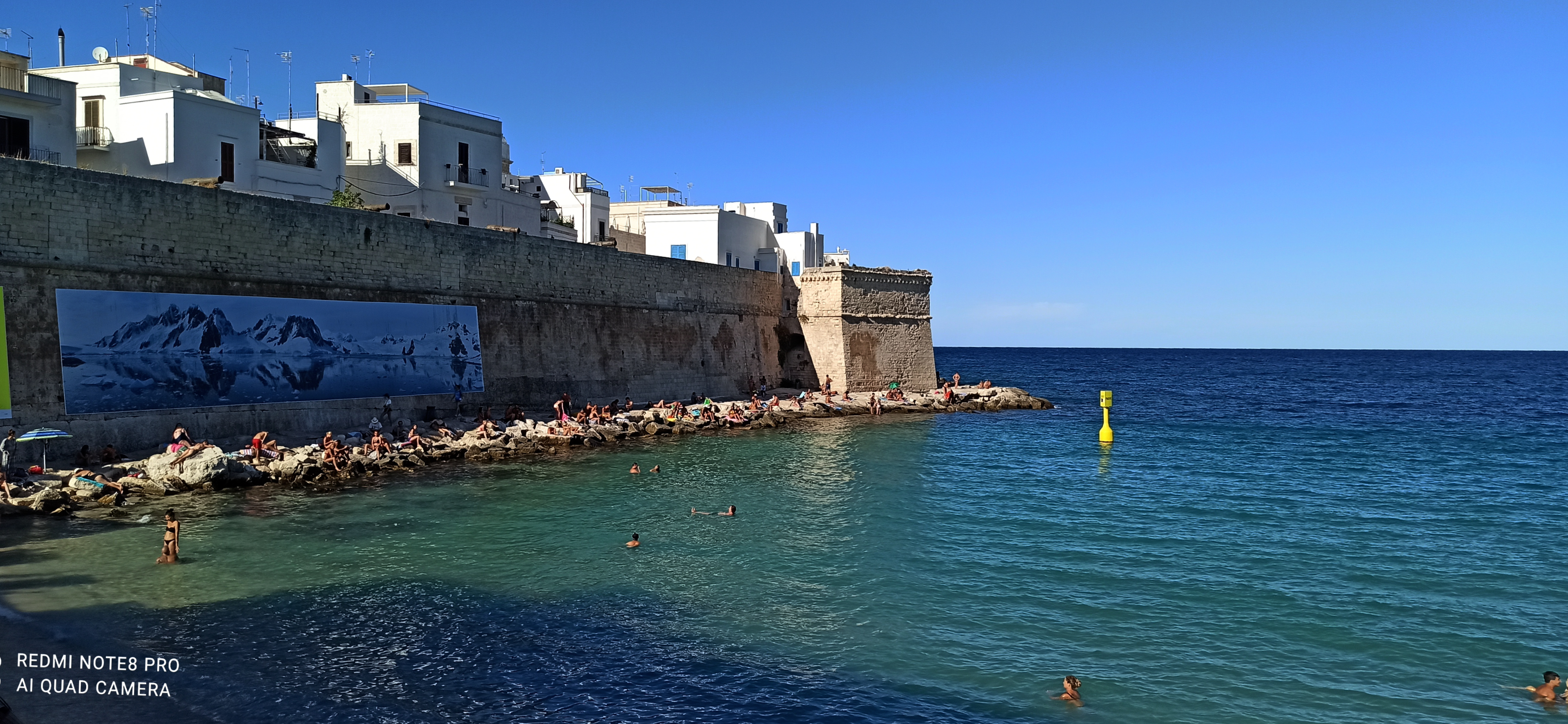
A fishing village, a city founded on the sea. A large white square where the houses in its center are whitewashed and many host fishermen. And then churches, alleys and squares, noble palaces from the eighteenth century or from the Murat era. Here and there evidence and remains of medieval fortifications that tell its ancient history. Golden and sandy beaches with crystal clear waters. A port treasure trove of a lively maritime civilization. But Monopoli is also agro. Districts, centuries-old olive trees, fortified farms and rock churches that tell of a unique city. To say Monopoli is to say bathe in the sea. For most it is undoubtedly the most beautiful stretch of coast in the Bari area. One of those discoveries that leave their mark forever. In fact, among the many experiential tourism opportunities that Monopoli offers you is that of bathing. The entire coastal strip, almost 15 km long, is varied but with a common denominator: clean and irresistible waters with peculiar reefs.
Not surprisingly, several times over the years, it has obtained the prestigious recognition of "Blue Flag" city and that of Lega Ambiente. The northern area, together with the more central area of the city, is characterized by low and jagged cliffs, here and there, alternating with small and medium-sized inlets or coves. To the south and in some stretches of the well-known locality "Capitolo", however, you can enjoy very long beaches of fine golden sand. You will also be able to admire, in some stretches of the beach, the fascinating and typical coastal sand dunes.
Among the emotions that the local sea will offer you is the vision of sea cliffs, caves obtained by the erosive action of sea water. Many sports to practice in the water or along the beaches. There are several lidos equipped with refreshment points, cabins, umbrellas and sunbeds, pedal boat hire and areas reserved for sportsmen and discos.
But Monopoli also has a renowned historic centre. The initial bewilderment due to the size is soon replaced by the pleasure of the eye that lets itself be captured by ancient squares, noble palaces and whitewashed houses. This is the "old town" as the inhabitants of Monopoli usually call it. Right here there is a high concentration of cultural heritage and churches. The latter almost all next to each other. The sea air creeps in between narrow paved alleys of chianche, between arches and alleys: smells that mix with the scents of freshly hung clothes or meatballs and meat sauce cooked for hours and which come out of the typical green shutters, almost always open. These houses were once mainly inhabited by fishermen, whose children and grandchildren can be seen here and there still intent on repairing their fishing nets.
These are the fascinating atmospheres of a seafaring culture that is still alive and are revealed above all at nightfall when the fishing fleet arrives at the port. Among shouts and excited movements, various scents and colors, a microcosm comes to life that contains the authentic values of a Mediterranean and Levantine tradition. In the inlet of the ancient natural port, the "vozz" (gozzo) still finds shelter, the typical local boat, all in wood, with its characteristic colors, blue and red.
Monopoli is a city born on the sea and which also thrives on the sea. Its historic center represents a strong attraction due to the presence of many small restaurants and trattorias, where it is possible to taste fish-based dishes. There is no shortage of trendy bars and clubs that attract young people. But together with these places it will not be difficult to come across small fishermen's rooms, craft shops or "food" shops, able to resist the offensive of the hypermarkets. In a populous historic centre, everything must be close at hand.
How to get there:
By car: 45 km from Bari
By train: 35’ (Ferrovie dello Stato)