D'Itria Valley
ALBEROBELLO
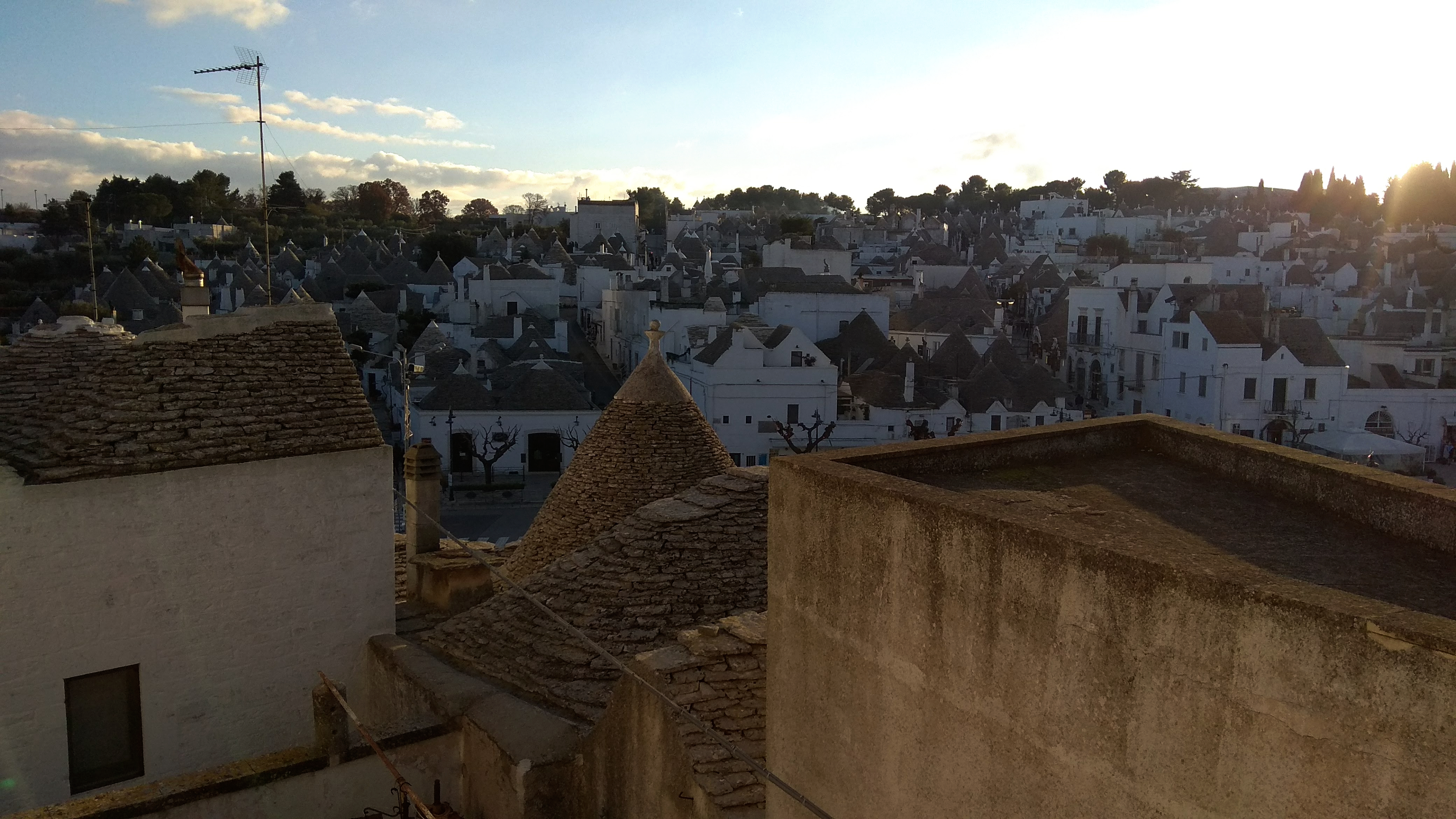
Also known as the "Capital of Trulli", Alberobello is a village in Puglia that is absolutely worth a visit. The architectural uniqueness and historical importance of this Italian municipality have been recognized by UNESCO and the city has been a World Heritage Site since 1996. Furthermore, the Italian Touring Club has awarded the city the orange flag, a mark of tourist quality. environmental while the ANCI has recognized it as one of the most beautiful villages in Italy.
The trulli are a type of conical construction in dry stone, traditional of central-southern Puglia. Most are found in the Valle d'Itria, where Alberobello is located. Although these constructions are the refinement of the prehistoric tholos, present in the various areas of Italy, the trulli are nevertheless distinguished from them by their continuity of use.
The oldest trulli in Alberobello date back to the 14th century. It was precisely in that period that this initially uninhabited land was assigned to the first count of Conversano Andrea Matteo III Acquaviva d'Aragona, who decided to introduce about forty peasant families from the feud of Noci. Over time, rural settlements arose in the area which, merging little by little, formed real villages that were later nicknamed Aia Piccola and Monti.
To avoid paying taxes on new settlements to the Kingdom of Naples, the new settlers were forced to build dry stone walls, without mortar, so they could be easily dismantled. However, the use of this particular construction technique was also due to the abundance of limestone in those areas, which was used for construction.
To visit the trulli of Alberobello, it is necessary to wander around its characteristic alleys. After leaving the car in the car park near the town, you can first go and discover this fairytale town.
The Monti district is made up of 1,030 trulli. These are aligned along the edges of eight irregular streets that proceed towards the top of the hill, on top of which stands the church of Sant'Antonio da Padova, also in the shape of a trullo. Here there are trulli of all kinds, but the best known are the Trulli Gemelli, united at the top but with entrances that open onto two different streets. Once connected by an external door, it is said that they separated following a feud between two brothers, in love with the same girl. Many of the trulli in this area host small shops and artisan shops where you can go shopping.
To admire the Rione Monti from above and enjoy a spectacular panorama, just go to Piazza Gian Girolamo D'Acquaviva D'Aragona, where there is the panoramic terrace of the Belvedere or Terrace of Santa Lucia, made public to visitors in the 90s .
How to get there:
By car: 55 km from Bari
By bus: 1.05 h (Ferrovie Sud Est)
LOCOROTONDO
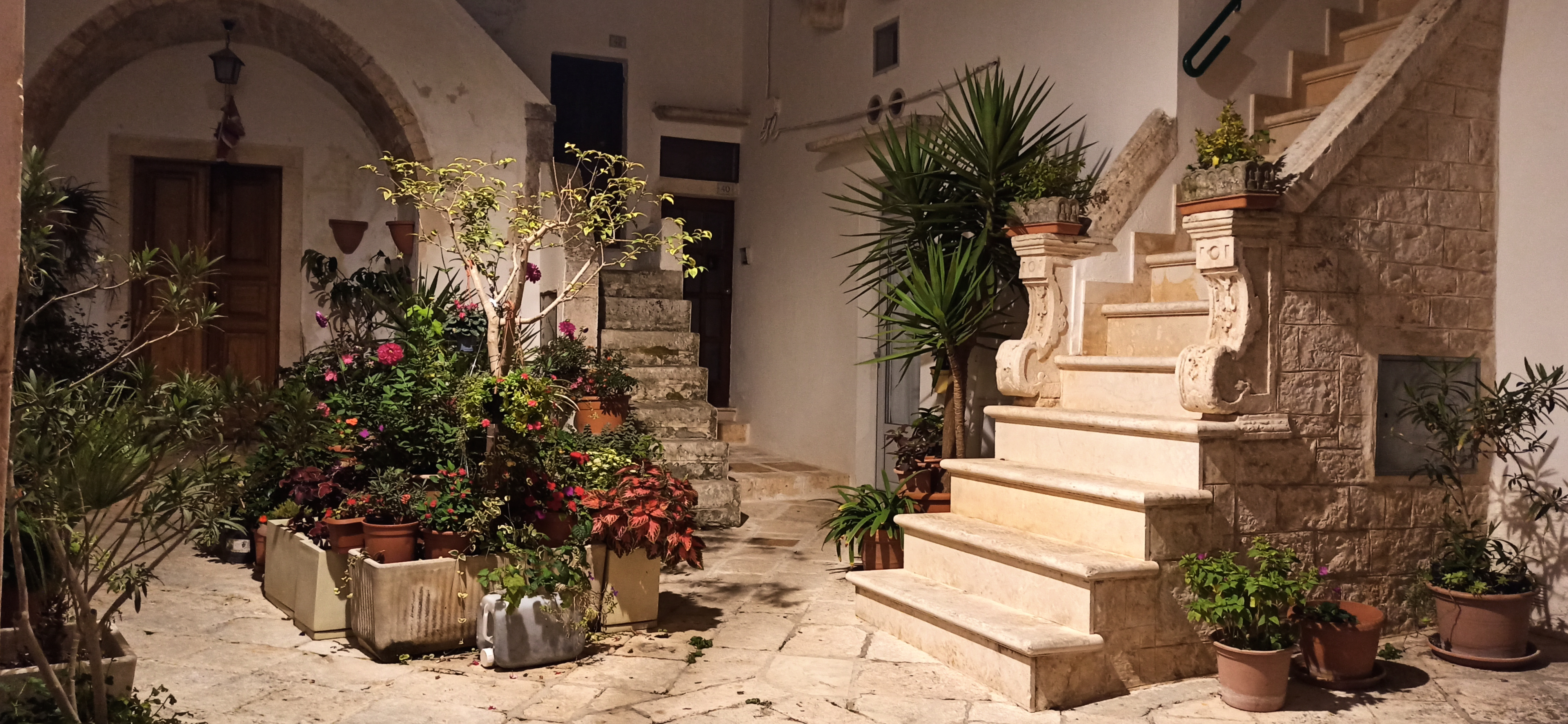
The white Locorotondo is the most beautiful balcony of the "Valle dei Trulli". The characteristic pointed roofs in gray stone, "Le cummerse", make the facades of the houses soar high, which inside have rooms with typical star vaults. From its belvedere you can admire an area that is at times exciting: a mosaic of small vineyards marked by dry stone walls, patches of Mediterranean scrub and silvery olive groves that surround ancient farmhouses, thousands of trulli scattered throughout the districts. Furthermore, the small ancient nucleus of Locorotondo, enclosed in its circular perfection of stones and lime, once marked by the walls, seems suspended between dream and reality: the white lime envelops everything, it acts as a dazzling background to the local Baroque architecture, exalted from the spots of intense color of the flowered balconies.
The heart of the historic center is Piazza Vittorio Emanuele, a living room created by the surrounding architecture. Crossing Porta Napoli you enter the welcoming and elegant 19th century square. It was once called Piazza Castello because it ran alongside the ancient castle, which presumably stood where the Addolorata church is currently located
Even if the castle no longer exists in this square, it can still be seen on the right, as soon as you cross the columns of Porta Napoli, an ancient building built to defend the small village. Also on the right side is an imposing 19th-century mansion, which in the upper part has a frame painted in a delicate pink. On the other side of the square stands the grandiose Palazzo Aprile-Ximenes, also from the 19th century, completely frescoed with a very bright shade of the typical Pompeian red. Between the two buildings there is a historic courtyard house with the typical "cummerse" roofs. This courtyard house is enclosed by an ancient limestone wall structure with a pointed arch whose ashlars are carved with late medieval motifs. In all likelihood these ashlars are reused materials perhaps belonging to the ancient Porta Napoli which was demolished and rebuilt in the 19th century. The decorative motif of these ashlars is very varied, ranging from the two winged tarragon placed at the ends of the arch to the canestrato effect, scales or racemes along the entire curve of the portal.
An aedicule with the statue of the Madonna has been inserted in the upper part. The square houses craft and recreational workshops and the mosaic coat of arms of the city stands out on the floor. Worth seeing are the Mother Church dedicated to San Giorgio Martire, the Church of San Nicola (with a trullo dome and a "cummersa" nave), the Church of the Madonna della Greca.
Locorotondo is famous for its approximately 130 districts, for its Bianco Locorotondo DOC wine and for the new production of wines deriving from native vines, as well as for the "gnumerèdde suffuchète", lamb tripe rolls, tied with the animal's intestines and cooked for a long time in terracotta pans and "A Ciallèdde", a typical dish of the peasant and Mediterranean tradition.
How to get there:
By car: 65 km from Bari
By bus: 1.20 h (Ferrovie Sud Est)
OSTUNI
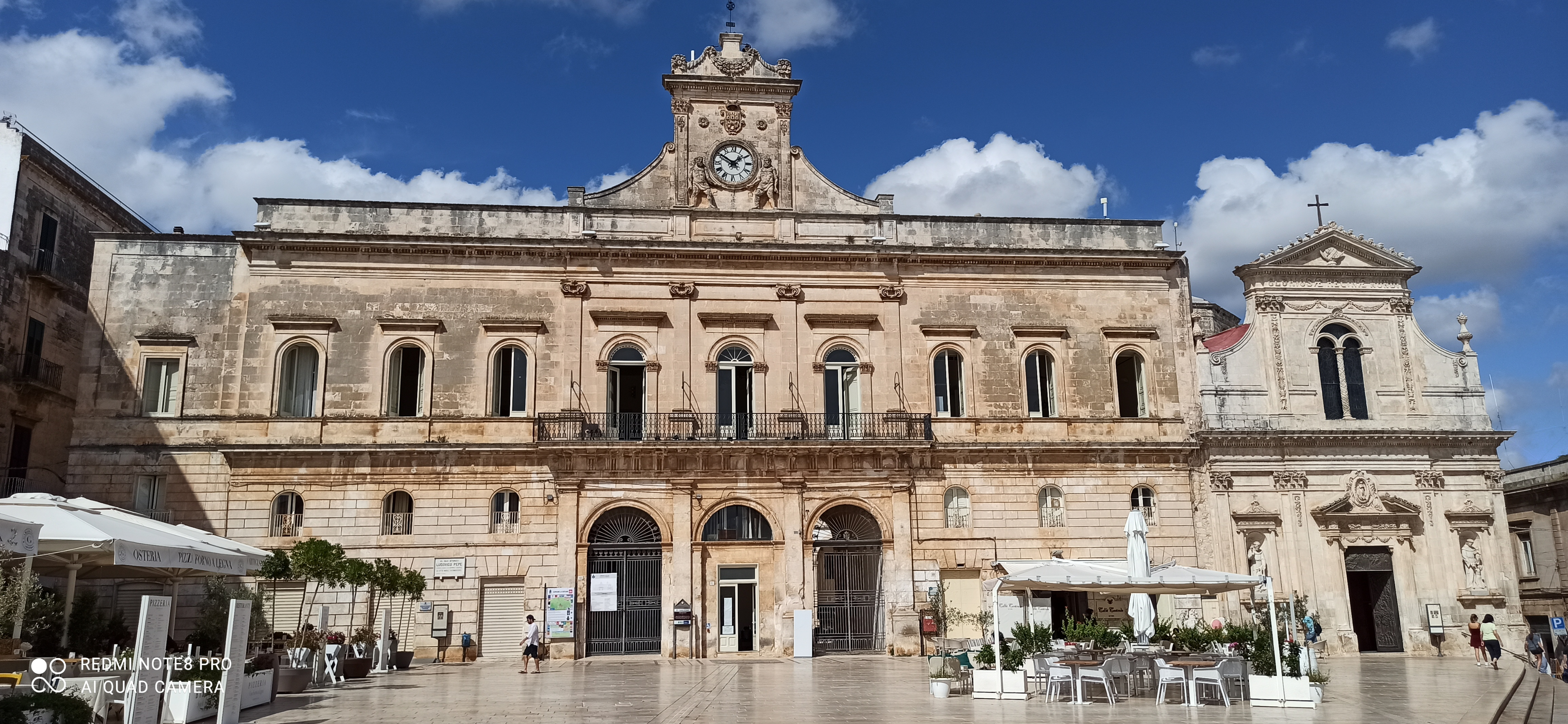
Picturesque and waiting to be discovered is Ostuni, the "White City". Renowned tourist destination, Ostuni boasts a wonderful medieval village, full of narrow streets and whitewashed houses in a maze that resembles an Arab casbah. Perched on three hills in a panoramic position, the picturesque White City unrolls its maze of whitewashed streets full of history and animated by artisan shops and typical restaurants.
The magic of Ostuni is linked to the characteristic lime coloring of the ancient village, a practice still strictly respected by the residents. It is the unmistakable jewel that gives Ostuni its picturesque urban identity. It is defined by the people of Ostuni as "the Earth". Painted only in white, it stands on the highest hill in the urban area. Here it is all a multiplication of floors, ups and downs, alleys and stairways, intricate alleys that cross arches and small squares overlooked by white houses embellished with geraniums, artisan shops, typical trattorias and small shops.
In the center of the town stands the fifteenth-century Cathedral in Romanesque-Gothic style on which a large rose window with 24 rays of rare beauty stands out.
Along via Cattedrale which divides the medieval heart of the city in two, is the former Carmelite Convent, home to the Museum of Preclassical Civilizations of Southern Murgia where the cast of Delia, a pregnant woman who lived 25,000 years ago, is exhibited.
In Piazza Beato Giovanni Paolo II (Piazzetta Cattedrale) the eighteenth-century buildings of the Bishop's Palace and the ancient Seminary face each other, connected by the evocative Scoppa arch. On the ground floor of the Bishop's Palace is the Diocesan Museum, which preserves and exhibits the extraordinary historical-artistic heritage of the Church of Ostuni with masterpieces of international value.
Churches and stately buildings follow one another in the old city surrounded by the Aragonese walls where Porta Nova and Porta San Demetrio open.
The Ostuni countryside, on the other hand, is dotted with farms, many of which have been transformed into welcoming farmhouses and luxury resorts. Among others, Santa Caterina with the high octagonal tower at the fortified farm, Lo Spagnulo and the Cappuccini farm with its trulli.
Along the seventeen kilometers of coast of Ostuni, in a wonderful play of colours, long beaches wind with dunes covered with Mediterranean scrub and an alternation of sandy coves and rocky coast. The coast of Ostuni is today one of the major seaside tourist attractions of Puglia. the accommodation facilities present, including villages, campsites, residences, holiday apartments, present one of the most complete types of offer, able to satisfy the most varied needs of tourists.
How to get ther:
By car: 84 km from Bari
By train: 45’ (Ferrovie dello Stato)